Evidence and label comparisons · WSNC nutrition education
Ashwagandha Supplements: Evidence and Extract Comparisons
Ashwagandha products differ in plant part, extract composition and companion herbs. Ashwagandha Forte and Ashwagandha Complex both list root extracts, but their declared amounts and complete formulas differ. Compare the selected label and suitability questions rather than assuming equal milligrams or the word adaptogen predicts the same outcome.
Compare the extract within the full formula
Ashwagandha Forte declares 400 mg of a 10:1 root extract and 10 mg of withanolides per tablet. Ashwagandha Complex declares 95 mg of a 10:1 root extract alongside skullcap, licorice and Korean ginseng extracts. The product name and shared plant do not make their full ingredient lists interchangeable.
The table compares one labeled tablet of each product. Their manufacturer directions differ, so these rows are not equivalent daily schedules. Confirm the current package and practitioner directions instead of increasing tablets to make one formula resemble the other.
| Product | Declared serving facts | Important distinction |
|---|---|---|
| Ashwagandha ForteView product → | Declared serving factsOne tablet: ashwagandha root 10:1 extract 400 mg, equivalent to 4.0 g root, with declared withanolides 10 mg; calcium 88 mg. | Important distinctionAshwagandha-focused extract. The root-equivalent amount is not 4 g of extract or a universal daily recommendation. |
| Ashwagandha ComplexView product → | Declared serving factsOne tablet: ashwagandha root 10:1 extract 95 mg, skullcap extract 117.5 mg, licorice extract 62.5 mg and Korean ginseng extract 20 mg; calcium 70 mg. | Important distinctionMulti-herb formula with additional cautions. Do not infer Forte's withanolide declaration for this product. |
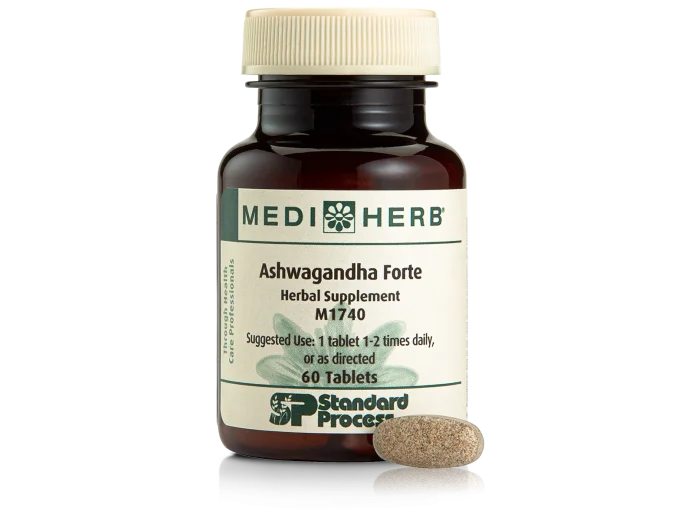
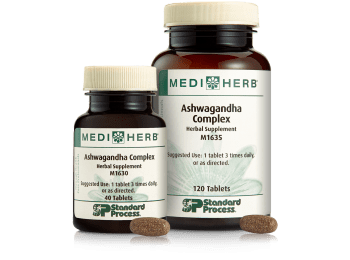
References: WSNC Ashwagandha Forte recorded label details ↗ · WSNC Ashwagandha Complex recorded label details ↗
Keep the research specific to the preparation
NIH describes research suggesting possible benefits for stress and sleep with some ashwagandha preparations, but studies have used different extracts and often small groups. That does not establish identical effects for every product carrying the ingredient name, or prove that either complete WSNC formula was tested in those studies.
Keep the intended question specific: daily stress, sleep difficulty and a diagnosed condition are different decisions. This guide is not a treatment plan for anxiety, insomnia or hormone disorders. A practitioner can help assess persistent concerns and decide whether an ingredient comparison is the appropriate next step.
References: NIH ODS ashwagandha research overview ↗ · NCCIH ashwagandha usefulness and safety ↗
Distinguish extract weight, plant equivalent and constituents
A 10:1 extract ratio describes the stated relationship between starting plant material and extract; it is not a rating of clinical strength. Forte's 400 mg extract is presented with a 4.0 g root equivalent. Those figures describe the same serving in different ways and should not be added together.
Withanolides are a group of plant constituents. Forte provides a declaration for them; the inspected Complex panel does not give the same declaration for its ashwagandha portion. Do not calculate an unlisted amount from the ratio or transfer Forte's value to Complex. Match the actual preparation and label information before drawing a study comparison.
References: WSNC Ashwagandha Forte recorded label details ↗ · WSNC Ashwagandha Complex recorded label details ↗ · NIH ODS ashwagandha research overview ↗
Companion herbs change the label questions
Complex includes licorice, skullcap and Korean ginseng. Their presence introduces considerations beyond the ashwagandha extract amount. Someone comparing an ashwagandha-focused product with a multi-herb formula should bring the full ingredient lists, not only the headline botanical, to a practitioner discussion.
Also check the tablet ingredients and calcium declaration. The two products have different other ingredients and labeled directions. A dietary attribute shown for one product should not be applied to another formula or inferred from an herbal category. Check the selected package rather than treating a plant name as a guarantee about the whole tablet.
References: WSNC Ashwagandha Forte recorded label details ↗ · WSNC Ashwagandha Complex recorded label details ↗ · NIH ODS understanding supplement labels ↗
Read the cautions before choosing a formula
NCCIH advises avoiding ashwagandha during pregnancy and breastfeeding and highlights thyroid, autoimmune, surgery, medication and liver-related concerns. Long-term safety is not established. Possible interactions include sedatives, thyroid medicines and some blood-pressure, diabetes and immune-system medicines.
The Complex manufacturer cautions include high blood pressure, edema, congestive heart failure, low potassium, pregnancy and lactation, and stopping during acute infection or fever. Both recorded products require physician direction with thyroid conditions. These are important distinctions, not instructions to manage a condition by switching products. Review the current label with your practitioner or pharmacist.
References: NCCIH ashwagandha usefulness and safety ↗ · WSNC Ashwagandha Forte recorded label details ↗ · WSNC Ashwagandha Complex recorded label details ↗
Connect the ingredient to the actual concern
The existing Ashwagandha Forte versus Adrenal Complex page answers a narrower two-product comparison. The sleep and stress guides provide different context for the concern that led you here. Follow those reading paths rather than creating a supplement stack from several similarly named pages.
A protocol containing Ashwagandha Forte can link here for extract and safety education. Its ingredient match does not establish an outcome for the entire kit or mean that a multi-herb replacement fits the same plan. Review every component and avoid doubling shared herbs without individualized guidance.
References: NCCIH ashwagandha usefulness and safety ↗ · FDA consumer supplement information ↗
Protocol label reading
These kits contain a product compared in this guide. That ingredient match does not establish effects for the complete kit or individual suitability. Review all components with your practitioner.
Common questions
Are Ashwagandha Forte and Ashwagandha Complex equivalent?
No. Their recorded root-extract amounts, companion herbs, directions and cautions differ. The guide compares labeled servings without recommending a conversion.
Does 10:1 mean an extract is clinically stronger?
The ratio describes a plant-to-extract relationship. It does not by itself establish superior outcomes, equal constituents or equivalence to a studied preparation.
Does Complex declare the same withanolide amount as Forte?
Forte lists 10 mg per tablet. The inspected Complex panel does not provide that same declaration for its ashwagandha portion; this guide does not infer one.
Is ashwagandha appropriate during pregnancy or with thyroid medicines?
NCCIH advises avoiding it during pregnancy and breastfeeding and highlights thyroid and medication concerns. Discuss the complete product with a qualified healthcare professional rather than using this comparison as individual clearance.
Evidence and product label sources
WSNC label links below present recorded Standard Process product information on our site. Noncommercial references explain ingredients, evidence limits and safety; they do not verify every formula amount or establish a treatment outcome for a finished product or protocol. The referenced organizations do not endorse this store.
- NIH ODS ashwagandha research overview ↗
- NCCIH ashwagandha usefulness and safety ↗
- WSNC Ashwagandha Forte recorded label details ↗
- WSNC Ashwagandha Complex recorded label details ↗
- FDA consumer supplement information ↗
- NIH ODS understanding supplement labels ↗
Manufacturer nutrition-panel amounts shown here were checked October 13, 2026. Confirm the current packaging, directions and dietary information before use. Your healthcare practitioner can help assess individual suitability.
How we research products → · Prepare a practitioner conversation →