Sleep & relaxation · WSNC nutrition education
Sleep & Relaxation Supplements: What to Compare
Sleep and relaxation supplements are not one interchangeable category. Sleep timing, occasional difficulty winding down and persistent insomnia are different questions. Begin with the pattern you want to discuss, then compare ingredients and evidence. A calming description on a label does not establish that a formula treats a sleep disorder.

Describe the sleep pattern before comparing ingredients
Note bedtime, wake time, difficulty falling asleep, nighttime waking and daytime effects. Include caffeine, shift changes and occasional sleep products. Bring a short record to the conversation rather than relying on the phrase poor sleep alone.
Persistent problems deserve assessment. NCCIH distinguishes complementary approaches from established insomnia care; do not let a supplement shortlist replace that discussion.
References: NIH NCCIH: Sleep and complementary approaches
Separate minerals, botanicals and sleep-timing products
Magnesium is a nutrient comparison, ashwagandha is a botanical comparison and melatonin addresses another set of timing questions. Their ingredient roles are not equivalent even when retailers place them in the same sleep category.
Compare the exact preparation and serving used in research with the finished label. Evidence for an ingredient or extract cannot be transferred automatically to every blend that mentions it.
References: NIH ODS: Magnesium · NIH NCCIH: Melatonin · NIH NCCIH: Ashwagandha
Ask what the evidence actually measured
Look for the population, ingredient preparation, duration and sleep outcome being studied. A change in one measure is not proof that the product resolves every kind of disrupted sleep.
NCCIH notes that evidence does not support melatonin as a general treatment for chronic insomnia. Ask a clinician which approach fits the particular problem rather than treating all sleep supplements as substitutes for one another.
References: NIH NCCIH: Melatonin
Review other products and next-day demands
Show your pharmacist every medicine and supplement you use, including occasional nighttime products. Ask about combining ingredients and about the implications for your normal work, driving and daytime routine.
Follow the selected label and the advice given for your circumstances. Do not increase a serving because another night was difficult or combine several formulas simply because they use similar calming language.
Compare the recorded products without a treatment promise
The linked mineral and botanical products illustrate different ingredient approaches within the existing catalog. Read their listing focus and full cautions before treating them as candidates for your practitioner discussion.
A product placed beside a sleep guide is not thereby a proven sleep treatment. Keep the exact label contribution separate from the reason the guide helps you discover it.
Keep a record that supports a useful follow-up
If a clinician agrees on a change, record what changed and how sleep and daytime functioning developed. Avoid making several simultaneous additions that leave you unable to explain the routine.
For a stress-focused ingredient comparison, use the existing ashwagandha-versus-adrenal guide. For menopause-related questions, use the broader menopause nutrition guide alongside your symptom discussion.
Questions to guide a useful comparison
| Question | Why it matters | What to compare |
|---|---|---|
| Sleep pattern | Timing, winding down and persistent insomnia differ. | The pattern and the outcome you want to discuss. |
| Ingredient evidence | Preparations and blends can differ. | Exact ingredient, extract, serving and research context. |
| Whole routine | Occasional products still belong in the review. | Medicines, supplements and daily activity demands. |
Compare recorded product labels and directions
These examples show different formula approaches. Their inclusion does not establish suitability for every reader, equivalent effects, or approval to take them together.
| Product | Listing focus | Declared formula in brief | Label directions |
|---|---|---|---|
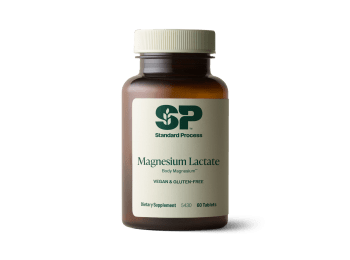
| Magnesium LactateView product →Standard Process | Magnesium Lactate delivers essential magnesium for system-wide cellular function* | Each Serving Size (2 Tablets) contains: Calories 10, Total Carbohydrate 1 g, Magnesium 200 mg. Ingredients: Magnesium lactate and calcium stearate. | Two tablets per day, or as directed.Full ingredients and cautions → |
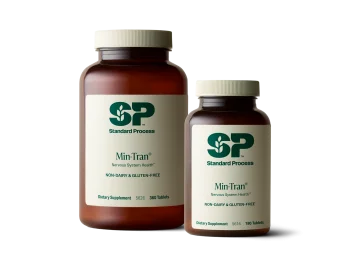
| Min-Tran®View product →Standard Process | Nervous system health* | Three tablets list calcium 180 mg, magnesium 70 mg and iodine 450 mcg. Ingredients include calcium lactate, magnesium citrate, honey, kelp and alfalfa. These amounts describe three tablets, not one tablet or automatically the full daily amount. | Three tablets twice per day, or as directed.Full ingredients and cautions → |
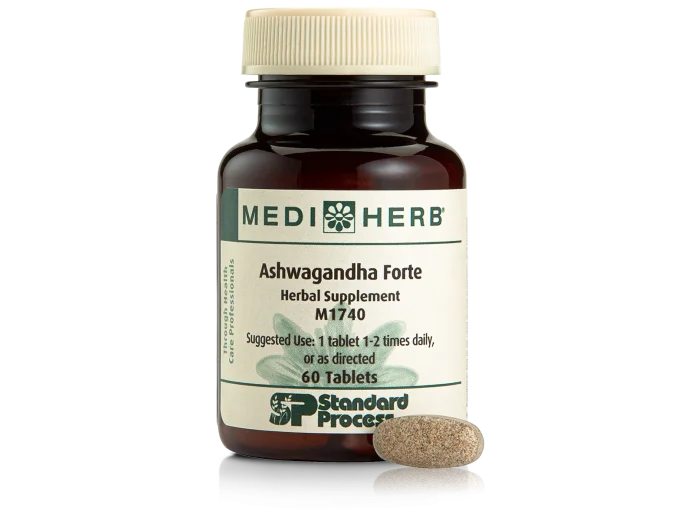
| Ashwagandha ForteView product →MediHerb | A standardized Withania somnifera root extract traditionally used to support resilience, calm, cognition and general well-being during occasional stress.* | Each tablet supplies 400 mg of a 10:1 Ashwagandha root extract, equivalent to 4 g of root and standardized to 10 mg withanolides, plus 88 mg calcium. | One tablet one to two times daily, or as directed by your healthcare practitioner.Full ingredients and cautions → |
Questions about sleep & relaxation
Are magnesium, melatonin and ashwagandha equivalent sleep aids?
No. They are different ingredient types with different evidence and cautions. Compare the particular question, preparation and complete product rather than assuming they have the same effect.
Can sleep supplements treat chronic insomnia?
Do not assume they do. Persistent insomnia warrants a clinician discussion about assessment and established care; a calming product claim does not establish treatment effectiveness.
Should I combine several relaxation products?
Have the full combination reviewed first. Similar marketing language can conceal repeated ingredients or other concerns that are not apparent from a single front label.
Evidence and product information sources
- NIH NCCIH: Sleep and complementary approaches ↗
- NIH ODS: Magnesium ↗
- NIH NCCIH: Melatonin ↗
- NIH NCCIH: Ashwagandha ↗
- FDA: Information for supplement consumers ↗
- Authorized WSNC Standard Process store information ↗
Public health references explain nutrition and evidence limits; they do not endorse WSNC or these products. The product table uses existing catalog records. No new clinician review, label refresh or price update is claimed.