Skin & Connective Tissue
Protocol: Skin Barrier Health Support
Nutritional and herbal support for skin barrier function and integrity*
$323.40View details →
Topical and oral products supporting healthy skin, capillaries and connective tissue.
8 products in this guide
Skin and connective-tissue support may involve topical products, fatty acids, nutrients, botanicals or tissue-based ingredients. Compare whether the goal is skin barrier, capillary or connective-tissue support and distinguish topical products from oral formulas.
Skin and connective-tissue support may involve topical care, nutrients, fatty acids, botanicals or tissue-based ingredients.
Persistent rashes, wounds or rapidly changing skin findings require clinical assessment.
Nutritional and herbal support for skin barrier function and integrity*


With a proprietary Standard Process PMG™ blend
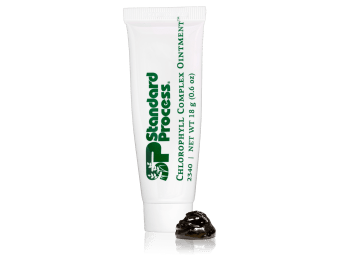
Moisturizes and soothes for healthy-looking skin
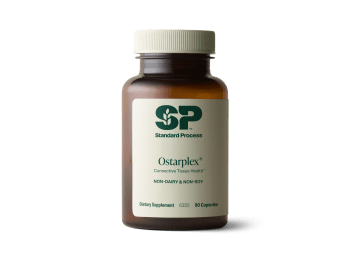

Topical ointment for practitioner-guided skin care
Explore kits related to this health goal. Each page explains the recorded products, the nutritional question and what to discuss with your practitioner.
Skin comfort and barrier function involve more than an oral supplement routine. Exposure, topical care and the cause of a rash or dryness all matter. This protocol provides products to consider within a broader plan, after distinguishing a nutrition question from a skin condition requiring diagnosis or treatment.
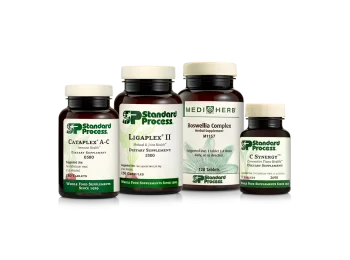
A tendon or ligament concern starts with the tissue involved, injury history and effect on movement. This protocol can help organize a nutritional discussion alongside an appropriate rehabilitation plan. It is not evidence that a painful area has a specific injury or that supplements will repair damaged tissue.
A kit is a combination to compare, not an individualized recommendation. Review the complete labels and overlapping ingredients before choosing.
Use the current product label and practitioner guidance for final selection.
First establish whether the product is topical or oral. Then compare the actual ingredient statement and directions; sharing a skin-support heading does not establish the same route of use or formula.
| Product | Listing focus | Declared formula in brief | Label directions |
|---|---|---|---|
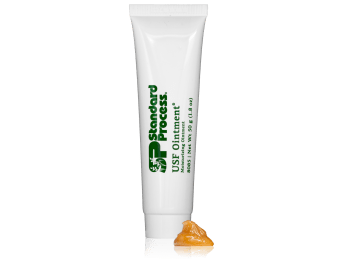
| USF Ointment®View product →Standard Process | Topical ointment for practitioner-guided skin care | External-use moisturizer containing lard, lanolin, organic flaxseed oil extract, sunflower lecithin, beeswax, bovine orchic extract and fragrance. It has no oral nutrient serving. | Moisturizes and protects the skin’s natural barrier. For external use only.Full ingredients and cautions → |
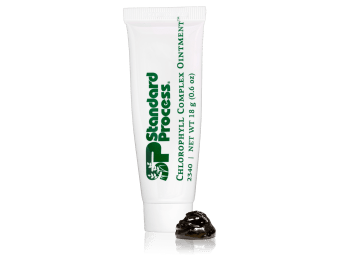
| Chlorophyll Complex Ointment™View product →Standard Process | Moisturizes and soothes for healthy-looking skin | An external emollient listing soy lecithin, fat-soluble alfalfa/sunflower extract, lard, lanolin, beeswax, bovine orchic extract and other oils and plant ingredients. The manufacturer warns that staining may occur. | To be applied locally as an emollient. For external use only.Full ingredients and cautions → |
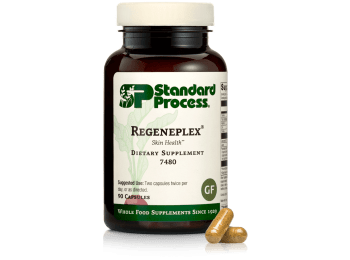
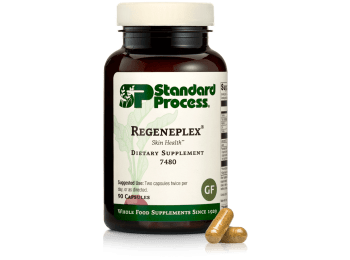
| Regeneplex®View product →Standard Process | Supports skin health* | Per two capsules: vitamin C 20 mg, choline 10 mg, zinc 2 mg, coenzyme Q10 15 mg and lutein 3.5 mg; proprietary blend includes buckwheat, guava, sunflower lecithin, tuna oil, holy basil and lemon peel. Contains fish (tuna). | Two capsules twice per day, or as directed.Full ingredients and cautions → |
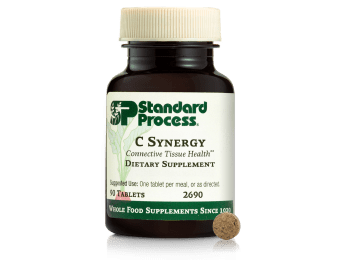
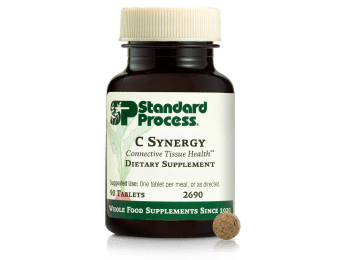
| C Synergy™View product →Standard Process | Supports healthy connective tissue* | One tablet declares vitamin C 100 mg and sodium 10 mg, with a 194 mg blend containing rose hips, veal bone PMG, echinacea, bovine adrenal, wheat germ, buckwheat and mushrooms. Contains wheat. Supporting collagen formation does not mean a declared dose of collagen peptides. Review the daisy-family allergy caution. | One tablet per meal, or as directed.Full ingredients and cautions → |
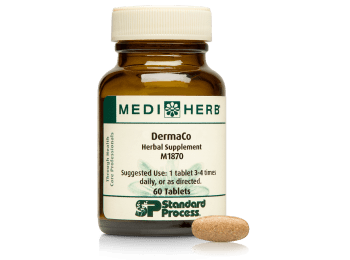
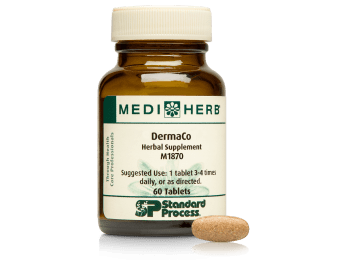
| DermaCoView product →MediHerb | Skin renewal support* | One tablet declares calcium 70 mg and extracts of Oregon grape 36 mg (10:1), sarsaparilla 90 mg (4:1), cleavers 72 mg (5:1), burdock 67.5 mg (4:1) and yellow dock 67.5 mg (4:1). The label does not separately quantify berberine. Contraindicated in pregnancy and lactation. | 1 tablet 3 - 4 times daily, or as directed.Full ingredients and cautions → |
What application instructions and ingredients does each topical label specify?
Topical ointment for practitioner-guided skin care
Moisturizes and soothes for healthy-looking skin
What serving and ingredient approach does each oral formula describe?
Supports skin health*
Supports healthy connective tissue*
Which herbs and individual cautions distinguish this formula?
Skin renewal support*
Compare the approaches, then read the specific labels and individual cautions.
WSNC adds independent comparison and practitioner context. Authorized Standard Process product listings remain the source for current product positioning and labels; NIH resources provide ingredient-level background; FDA guidance explains the consumer and regulatory framework for dietary supplements.
No. Keep route of use explicit and follow the product’s own directions. An ointment and an oral formula are different product types even when listed in the same guide.
No. Compare the full ingredient statement, route, serving or application instructions and cautions. The same named ingredient can appear in different formulations.
Read the exact listing focus, ingredients, serving directions, allergens and overlap with current supplements. Persistent skin concerns need appropriate clinical assessment.
Skin and connective-tissue support may involve topical products, fatty acids, nutrients, botanicals or tissue-based ingredients. Compare whether the goal is skin barrier, capillary or connective-tissue support and distinguish topical products from oral formulas. Product placement is based on the current manufacturer listing and is intended for navigation and education, not diagnosis.
Compare zinc label amounts, forms and added minerals. Review Standard Process zinc options, nutrient overlap and practical safety questions.
Read the guide →Compare vitamin C forms, labeled serving amounts and combination formulas. Explore Cataplex C and related WSNC products with qualified evidence and safety guidance.
Read the guide →