Evidence and label comparisons · WSNC nutrition education
Vitamin E Supplements: Declared Amounts and Combination Formulas
Vitamin E comparisons should use the declared nutrient amount and the full formula. Cataplex E and Cataplex E2 contain vitamin E alongside selenium and other ingredients; their names do not make them interchangeable high-dose vitamin E products.
Compare the exact preparation and labeled serving
The checked panels list vitamin E in milligrams, with separate selenium declarations. Different tocopherol forms and older IU measurements require care when comparing labels. Proprietary blend weight is not an additional declared vitamin E amount.
The amounts below reproduce the inspected manufacturer online panel. They describe labeled servings, not an individualized regimen. Confirm your selected package and review the full ingredient list and dietary attributes on the product page.
| Product | Declared serving facts | Important distinction |
|---|---|---|
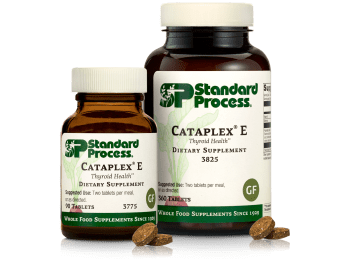
| Cataplex® EView product → | Declared serving factsEach Serving Size (2 Tablets) contains: Vitamin E 3.3 mg, Selenium 11 mcg. Proprietary Blend 510 mg: Bovine orchic extract, inositol, organic pea vine juice powder, ribonucleic acid, bovine adrenal, organic beet (root), organic oat flour, bovine spleen, ovine spleen, bovine liver, manganese lactate, and ascorbic acid. | Important distinctionRecorded dietary attributes: Not vegetarian; Not vegan. Read the complete Cataplex® E ingredient list and current package. The serving facts describe this formula; a shared ingredient does not make it equivalent to another product. |
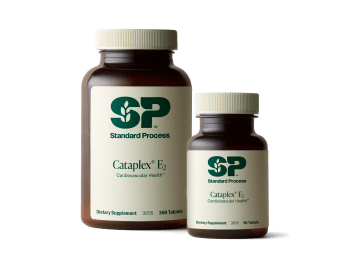
| Cataplex® E2View product → | Declared serving factsEach Serving Size (2 Tablets) contains: Vitamin E 2.7 mg, Selenium 9 mcg. Proprietary Blend 470 mg: Bovine orchic extract, calcium lactate, Spanish moss (Tillandsia usneoides), bovine spleen, ovine spleen, inositol, bovine adrenal Cytosol™ extract, organic oat flour, and ascorbic acid. | Important distinctionRecorded dietary attributes: Not vegetarian; Not vegan. Read the complete Cataplex® E2 ingredient list and current package. The serving facts describe this formula; a shared ingredient does not make it equivalent to another product. |
References: WSNC Cataplex® E recorded label details ↗ · WSNC Cataplex® E2 recorded label details ↗ · Vitamin E - Health Professional Fact Sheet ↗
What the ingredient evidence can establish
Vitamin E is involved in antioxidant protection and immune function. Its normal biological role does not prove that extra supplementation prevents heart disease, cancer or aging. NIH distinguishes nutritional needs from the results of high-dose intervention trials.
Research on a particular vitamin E form, dose and population cannot be assigned to every food-based combination. Compare the actual amount first, then consider why supplementation is being discussed rather than selecting the largest number.
References: Vitamin E - Health Professional Fact Sheet ↗
Review suitability, medicines and the whole formula
Higher supplemental vitamin E can increase bleeding concerns, especially with anticoagulant or antiplatelet medicines. Discuss planned surgery and other vitamin E products with your clinician. Review selenium overlap too because these formulas contain more than one nutrient.
Compare Cataplex E and Cataplex E2 by labeled serving, vitamin E, selenium and ingredients. Choose a formula for a defined nutrition question rather than a promise of general antioxidant protection.
References: WSNC Cataplex® E recorded label details ↗ · WSNC Cataplex® E2 recorded label details ↗ · Vitamin E - Health Professional Fact Sheet ↗
Prepare a focused practitioner conversation
Bring the selected label, your reason for considering vitamin e, and a list of medicines and other supplements. Compare the intended outcome with the specific preparation studied, and agree how suitability and any benefit will be assessed.
Manufacturer suggested-use text checked for these products: Cataplex® E: Two tablets per meal, or as directed. Cataplex® E2: Two tablets per meal, or as directed. Warnings: Keep out of reach of children.
These are separate product instructions, not one combined supplement schedule. Keep the current package directions with your practitioner plan; ingredient research does not override manufacturer labeling.
References: WSNC Cataplex® E recorded label details ↗ · WSNC Cataplex® E2 recorded label details ↗ · Vitamin E - Health Professional Fact Sheet ↗
Protocol label reading
These kits contain a product compared in this guide. That ingredient match does not establish effects for the complete kit or individual suitability. Review all components with your practitioner.
Common questions
How should I compare vitamin e supplement labels?
The checked panels list vitamin E in milligrams, with separate selenium declarations. Different tocopherol forms and older IU measurements require care when comparing labels. Proprietary blend weight is not an additional declared vitamin E amount.
Does ingredient research prove the complete formula works?
Research on a particular vitamin E form, dose and population cannot be assigned to every food-based combination. Compare the actual amount first, then consider why supplementation is being discussed rather than selecting the largest number.
What should I discuss before considering vitamin e?
Higher supplemental vitamin E can increase bleeding concerns, especially with anticoagulant or antiplatelet medicines. Discuss planned surgery and other vitamin E products with your clinician. Review selenium overlap too because these formulas contain more than one nutrient.
Evidence and product label sources
WSNC label links below present recorded Standard Process product information on our site. Noncommercial references explain ingredients, evidence limits and safety; they do not verify every formula amount or establish a treatment outcome for a finished product or protocol. The referenced organizations do not endorse this store.
- Vitamin E - Health Professional Fact Sheet ↗
- WSNC Cataplex® E recorded label details ↗
- WSNC Cataplex® E2 recorded label details ↗
Manufacturer nutrition-panel amounts shown here were checked October 14, 2026. Confirm the current packaging, directions and dietary information before use. Your healthcare practitioner can help assess individual suitability.
How we research products → · Prepare a practitioner conversation →