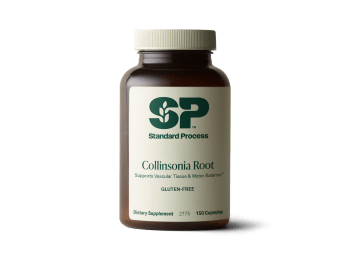
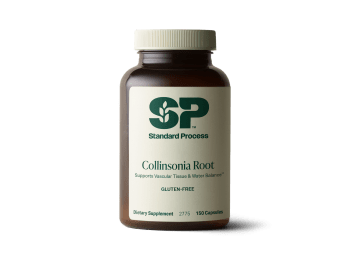
Product overview

What to know about Collinsonia Root

Collinsonia canadensis is an herb historically used to support vascular tissue and water balance. Review the listed serving, ingredients and cautions before choosing a supplement.*

Key label facts

Three capsules list 892 mg Collinsonia root. The amount is for the full three-capsule serving, not one capsule. Other ingredients are gelatin, water and calcium stearate. This is a root formula rather than a declared standardized extract.

These are labeled serving facts. Follow this product’s manufacturer directions and full cautions.

  • Collinsonia canadensis is an herb historically used to support vascular tissue and water balance.
  • See the listed ingredients and serving information for Collinsonia Root.
  • Read the manufacturer cautions and suggested use before ordering.

Ingredients and dietary attributes

Ingredient overview

Each Serving Size (3 Capsules) contains: Total Carbohydrate <1 g, Collinsonia (root) 892 mg. Other ingredients: gelatin, water, and calcium stearate. Confirm the current package label for complete information.

Dietary and allergen considerations

  • Gluten Free
  • Non-Soy Formula
  • Non-Grain Formula
  • Non-Dairy Formula
  • Not vegetarian
  • Not vegan

Contains gelatin; not vegetarian or vegan. Check the current package label and consult a healthcare practitioner for individual suitability. Keep out of reach of children.

Use the ingredient statement and label on the package you receive as the current source for dietary decisions.

Nutrient references

Ingredient research context

These NIH resources explain ingredients in the formula. They do not test or endorse this product.

Review current Collinsonia Root label and listing in the WSNC inSITE store β†— for the ingredients and nutrients in this product. The references below give ingredient or nutrient context; they do not test or endorse the formula.

  • Calcium

    This NIH resource provides background on calcium. Check the current product label for the ingredient form and amount; this reference does not test or endorse Collinsonia Root. NIH background: Calcium β†—

Compare the label details

Collinsonia Root label comparisons

Collinsonia Root serving amounts, ingredient forms and formula differences. Compare complete labels and manufacturer directions. A shared ingredient or health goal does not make these formulas dose-equivalent.

Compare recorded product information, then open each full product page for complete ingredients and cautions. Serving instructions are product-specific.
ProductListing focusDeclared formula in briefLabel directions
Collinsonia RootView product β†’Standard ProcessHistorically used to support vascular tissue and water balance*Three capsules list 892 mg Collinsonia root. The amount is for the full three-capsule serving, not one capsule. Other ingredients are gelatin, water and calcium stearate. This is a root formula rather than a declared standardized extract.Three capsules per day with a full glass of water, between meals, or as directed.Full ingredients and cautions β†’

How we distinguish product facts from ingredient research β†’

Common questions

Collinsonia Root FAQ

Clear answers based on the current manufacturer listing and practitioner context.

What is Collinsonia Root used for?

Collinsonia canadensis is an herb historically used to support vascular tissue and water balance.

How do I take Collinsonia Root?

Three capsules per day with a full glass of water, between meals, or as directed.

What is in Collinsonia Root?

Each Serving Size (3 Capsules) contains: Total Carbohydrate <1 g, Collinsonia (root) 892 mg.

Is 892 mg of Collinsonia Root the amount in one capsule?

No. The manufacturer declares 892 mg per three capsules. Its label does not give a standardized active-constituent amount. Follow the current directions with water and review relevant health-goal or protocol information without assuming oil-based formulas are equivalent.

Source transparency

Product sources and review notes

Product details and formulas may change. Review the current manufacturer listing and the label on the package before use. The date above records a price check; it is not an editorial review date. How we research product information β†’