Digestive Support
SP Children’s® ProSynbiotic
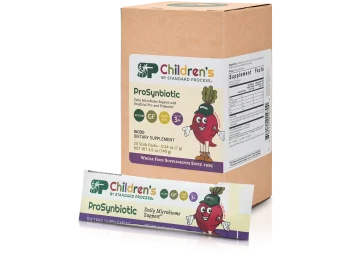
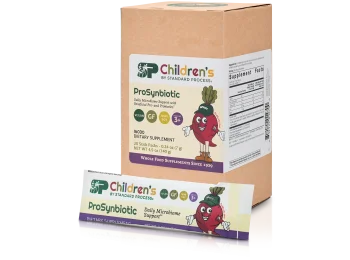
SP Children's ProSynbiotic is a children’s probiotic supplement which provides microbiome support, a good source of fiber, & promotes healthy bowel movements.*
$42.00View details →
Everyday Support with Elderberry and 2’-FL*
Explore the immune & respiratory support guide →You’ll continue to Standard Process’s secure WSNC storefront to review the official product listing and complete your order.
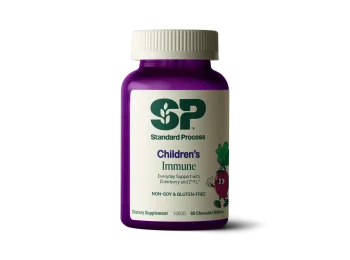
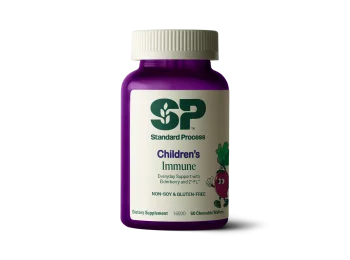
SP Children's Immune is a chewable supplement for children ages four and older, providing vitamin C, vitamin D, zinc, prebiotic 2'-FL and bovine colostrum. Review the listed serving, ingredients and cautions before choosing a supplement.*
For ages four and older, two wafers declare vitamin C 25 mg, vitamin D 15 mcg, zinc 6 mg, 2’-fucosyllactose 1.2 g, bovine colostrum 500 mg and a 430 mg plant blend. Contains milk. Use with adult supervision; this wafer formula is different from the ProSynbiotic stick pack.
These are labeled serving facts. Follow this product’s manufacturer directions and full cautions.
Each Serving Size (2 Wafers) contains: Calories 10, Total Carbohydrate 2 g, Vitamin C 25 mg, Vitamin D 15 mcg, Zinc 6 mg, 2'-Fucosyllactose 1.2 g, Colostrum (bovine) 500 mg. Proprietary Blend 430 mg: Organic strawberry fruit powder, organic elderberry fruit powder, organic guar fiber, organic beet (root), and monk fruit extract. Other Ingredients: Organic acacia fiber, organic acerola extract, zinc amino acid (rice) chelate, calcium stearate, and cholecalciferol. Contains milk. Confirm the current package label for complete information.


Contains milk and bovine colostrum and is not vegan. Use with adult supervision. The manufacturer also notes strawberry sensitivity may be relevant. Check the package before use.
Use the ingredient statement and label on the package you receive as the current source for dietary decisions.
These NIH resources explain ingredients in the formula. They do not test or endorse this product.
Review current SP Children’s® Immune label and listing in the WSNC inSITE store ↗ for the ingredients and nutrients in this product. The references below give ingredient or nutrient context; they do not test or endorse the formula.
This NIH resource provides background on vitamin c. Check the current product label for the ingredient form and amount; this reference does not test or endorse SP Children’s® Immune. NIH background: Vitamin C ↗
This NIH resource provides background on calcium. Check the current product label for the ingredient form and amount; this reference does not test or endorse SP Children’s® Immune. NIH background: Calcium ↗
This NIH resource provides background on zinc. Check the current product label for the ingredient form and amount; this reference does not test or endorse SP Children’s® Immune. NIH background: Zinc ↗
This NIH resource provides background on vitamin d. Check the current product label for the ingredient form and amount; this reference does not test or endorse SP Children’s® Immune. NIH background: Vitamin D ↗
How is Children’s Immune different from Children’s ProSynbiotic?. Compare the complete selected labels and manufacturer directions. Shared ingredients or health categories do not establish equivalent formulas or individualized doses.
| Product | Listing focus | Declared formula in brief | Label directions |
|---|---|---|---|
| SP Children’s® ImmuneView product →Standard Process | Everyday Support with Elderberry and 2’-FL* | For ages four and older, two wafers declare vitamin C 25 mg, vitamin D 15 mcg, zinc 6 mg, 2’-fucosyllactose 1.2 g, bovine colostrum 500 mg and a 430 mg plant blend. Contains milk. Use with adult supervision; this wafer formula is different from the ProSynbiotic stick pack. | For children ages four and older, chew two wafers per day.Full ingredients and cautions → |
| SP Children’s® ProSynbioticView product →Standard Process | SP Children's ProSynbiotic is a children’s probiotic supplement which provides microbiome support, a good source of fiber, & promotes healthy bowel movements.* | One 7 g stick pack declares 3 g fiber, iron 0.2 mg, sodium 15 mg and a 7 g blend of six plant-fiber sources with Lactobacillus acidophilus DDS-1, Bifidobacterium lactis UABLa-12 and Saccharomyces boulardii. The label states more than 30 billion CFU at manufacture, not a guaranteed end-of-shelf-life count. Adult supervision is required. | For children ages 3 and older, mix one stick pack with a beverage or food of choice, once per day, or as directed. Use with adult supervision. The manufacturer FAQ recommends mealtime and mixing into food or a drink such as…Full ingredients and cautions → |
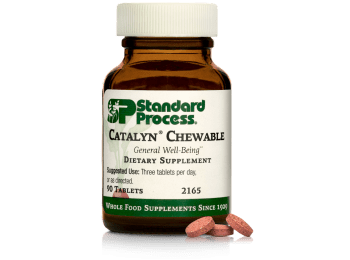
| Catalyn® ChewableView product →Standard Process | Supports overall well-being* | Three tablets declare vitamin A 360 mcg RAE, vitamin C 4 mg, vitamin D 7.8 mcg, thiamin and riboflavin 0.2 mg each, vitamin B6 1 mg and a 320 mg blend. Contains wheat germ, animal-derived ingredients, cane sugar, cherry ingredients and honey. This is a chewable tablet preparation, not the gluten-free capsule. | Three tablets daily, or as directed.Full ingredients and cautions → |
Clear answers based on the current manufacturer listing and practitioner context.
SP Children's Immune is a chewable supplement for children ages four and older, providing vitamin C, vitamin D, zinc, prebiotic 2'-FL and bovine colostrum.
For children ages four and older, chew two wafers per day.
Per two wafers, the current listing provides vitamin C 25 mg, vitamin D 15 mcg, zinc 6 mg, 2'-fucosyllactose 1.2 g and bovine colostrum 500 mg, plus a strawberry, elderberry and beet blend. Contains milk.
Children’s Immune uses two chewable wafers for ages four and older and declares vitamins C and D, zinc, 2’-FL and milk-derived bovine colostrum. Children’s ProSynbiotic is a separate fiber-and-probiotic stick-pack formula with its own age and mixing instructions. Do not transfer one product’s directions to the other. Tolerance research does not establish that either formula prevents infections.
Product details and formulas may change. Review the current manufacturer listing and the label on the package before use. The date above records a price check; it is not an editorial review date. How we research product information →


SP Children's ProSynbiotic is a children’s probiotic supplement which provides microbiome support, a good source of fiber, & promotes healthy bowel movements.*