Vegetarian & vegan diets · WSNC nutrition education
Choosing Supplements for Vegetarian & Vegan Diets
Choosing supplements for vegetarian and vegan diets requires two separate checks: whether a nutrient is relevant to your diet, and whether the finished product fits your dietary preference. Plant imagery, a whole-food description or a non-dairy claim does not establish vegan suitability. Use verified product-specific statements and the complete selected label to build a defensible shortlist.
Separate nutritional need from dietary compatibility
Describe the foods you include and exclude, then name the nutrient question you want to discuss. This keeps a dietary preference from becoming a reason to buy every product labeled vegan.
A compatible formula can still be unnecessary or duplicate another product. Conversely, a nutrient you want to compare may appear in a formula whose capsule or additional ingredients do not fit your preference.
Give B12 a focused place in the food discussion
NIH identifies people eating little or no animal food as a group that may not obtain enough B12 from diet. Fortified food and supplement questions deserve explicit attention rather than being hidden in a general wellness blend.
A B12-containing product is not automatically vegan. If a specific form, amount or ingredient source matters to you, confirm the finished-product statement before ordering; this guide does not infer a claim from the nutrient name.
References: NIH ODS: Vitamin B12
Check capsules, other ingredients and source materials
Read both the declared active ingredients and the other-ingredients section. A plant-based main ingredient does not describe everything in the finished tablet, capsule or softgel.
Use the product-specific dietary icons as a starting point, then open the full record and selected package. The examples below have recorded vegan statements; that does not mean every product in their broader health category shares the same designation.
Keep vegan, vegetarian and non-dairy claims distinct
Record the exact claim beside the product name. Non-dairy concerns one dietary exclusion; vegetarian and vegan describe different compatibility questions. A formula can satisfy one criterion while failing another.
If you also avoid gluten or soy, check those statements independently. Do not turn a row of affirmative icons into a claim that a product meets every restriction you might have.
Compare plant protein by its complete serving
For a protein powder, compare source ingredients, protein grams, calories, flavor and preparation. A mixed nutrition powder may include additional vitamins, minerals or fiber, so ask whether that wider role fits your meals.
Use the existing SP Complete comparison when the question is original versus dairy-free formulas. For a vegan preference, verify the particular version rather than transferring a claim between similar product names.
Make missing information visible before purchasing
If a dietary claim or source ingredient is not established, mark it as unresolved on your shortlist. Ask the practitioner or manufacturer about the selected finished product instead of assuming that the absence of a warning confirms compatibility.
The catalog facts and dietary assignments are preserved from existing observations. These examples help you compare; they do not imply that every nutrient question for a vegan diet is answered by the linked products.
Questions to guide a useful comparison
| Question | Why it matters | What to compare |
|---|---|---|
| Nutrient relevance | A dietary preference is not a complete nutrition assessment. | Food pattern, fortified foods and the specific nutrient question. |
| Finished-product claim | The main ingredient does not describe the whole formula. | Vegan or vegetarian statement, capsule and other ingredients. |
| Additional restrictions | One icon cannot establish every dietary requirement. | Gluten, dairy, soy and allergen information independently. |
Compare recorded product labels and directions
These examples show different formula approaches. Their inclusion does not establish suitability for every reader, equivalent effects, or approval to take them together.
| Product | Listing focus | Declared formula in brief | Label directions |
|---|---|---|---|
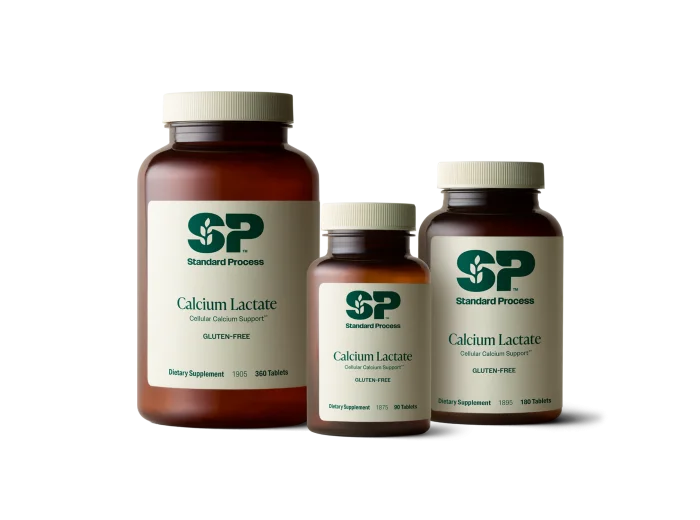
| Calcium LactateView product →Standard Process | A vegan, non-dairy calcium-and-magnesium formula supporting healthy bone structure, muscle contraction, nerve transmission and cellular function.* | Three tablets provide calcium from calcium lactate and calcium stearate plus magnesium from magnesium citrate. | Three tablets per day, or as directed by your healthcare practitioner.Full ingredients and cautions → |
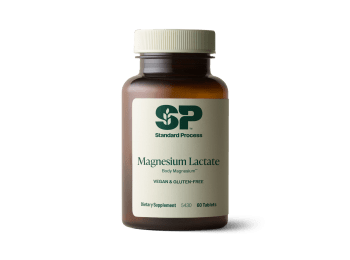
| Magnesium LactateView product →Standard Process | Magnesium Lactate delivers essential magnesium for system-wide cellular function* | Each Serving Size (2 Tablets) contains: Calories 10, Total Carbohydrate 1 g, Magnesium 200 mg. Ingredients: Magnesium lactate and calcium stearate. | Two tablets per day, or as directed.Full ingredients and cautions → |
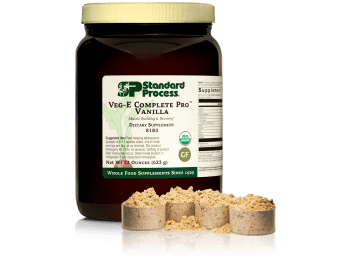
| Veg-E Complete Pro™ VanillaView product →Standard Process | Organic multisource blend of plant-based protein* | Each Serving Size (4 tablespoons) contains: Calories 130, Total Fat 2.5 g, Total Carbohydrate 7 g, Dietary Fiber 2 g, Total Sugars 4 g, Includes 4 g Added Sugars, Protein 15 g, Calcium 20 mg, Iron 4 mg, Sodium 370 mg, Potassium 120 mg. Proprietary Blend 26 g: Organic pea protein, organic pumpkin seed protein, and organic sesame seed protein. Contains: Sesame and tree nut (coconut). | Four heaping tablespoons (scoops) in 8-12 ounces water, one to three servings per day, or as directed. Mix product thoroughly for 10 to 15 seconds. Settling of product after mixing may occur. Store mixed product in refrigerator…Full ingredients and cautions → |
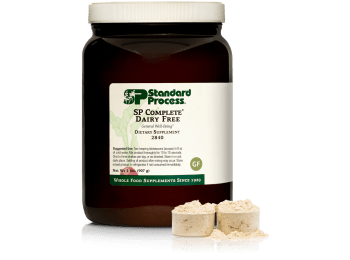
| SP Complete® Dairy FreeView product →Standard Process | Dairy Free Rice Protein | Each Serving Size (2 Heaping Tablespoons) contains: Calories 110, Total Fat 2 g, Total Carbohydrate 10 g, Dietary Fiber 4 g, Total Sugars <1 g, Protein 13 g, Choline 70 mg, Calcium 200 mg, Iron 0.5 mg, Sodium 25 mg, Potassium 80 mg. Proprietary Blend 27.8 g: Rice protein, flax meal, calcium citrate, magnesium citrate, organic buckwheat (aerial parts), organic Brussels sprouts (aerial parts), organic kale (aerial parts), inositol, organic alfalfa (aerial parts)… | Two heaping tablespoons (scoops) in 8 oz of cold water. Mix product thoroughly for 10 to 15 seconds. One to three shakes per day, or as directed. Store in a cool, dark place. Settling of product after mixing may occur. Store…Full ingredients and cautions → |
Questions about vegetarian & vegan diets
Does non-dairy mean vegan?
No. Treat those as different claims and review the finished product. Other animal-derived ingredients can matter even when dairy is excluded.
Is a whole-food supplement necessarily vegetarian?
No. The full formula may include animal-derived ingredients. Use the product-specific statement and complete ingredient record rather than the whole-food description alone.
Are all B12 supplements suitable for vegans?
Do not assume so. Check the complete product, including additional ingredients and capsule material, and confirm its dietary designation.
Evidence and product information sources
- NIH ODS: Vitamin B12 ↗
- FDA: Information for supplement consumers ↗
- Authorized WSNC Standard Process store information ↗
Public health references explain nutrition and evidence limits; they do not endorse WSNC or these products. The product table uses existing catalog records. No new clinician review, label refresh or price update is claimed.