Adults over 60 · WSNC nutrition education
Nutrition & Supplements After 60
Nutrition and supplement choices after 60 should reflect the person using them: meals, appetite, dietary restrictions, medicines and the practical ability to follow the label. This guide focuses on those everyday decisions. It helps you compare product roles and serving forms without turning a birthday into a universal supplement prescription.

Start with a usable record of meals and appetite
Describe a few typical days rather than an ideal menu. Include smaller meals, fortified drinks, snacks and products already used. Note whether preparation, shopping or chewing makes certain foods harder to include; those details can change the practical nutrition conversation.
If appetite or weight has changed unexpectedly, ask your clinician about assessment. An added powder is not enough information to explain the change or determine whether a complete nutrition product is needed.
Ask focused questions about B12 and vitamin D
NIH identifies age-related B12 absorption considerations and changes in vitamin D production. These are reasons for an individual nutrition discussion, not evidence that every older adult should take a high-dose combination.
When comparing products, copy the amount per serving and directions exactly. A blend name can hide the distinction between a small nutrient contribution and the main ingredient you actually want to evaluate.
References: NIH ODS: Vitamin B12 · NIH ODS: Vitamin D
Distinguish protein powders from complete nutrition
A protein powder, mixed nutrition shake and fiber formula answer different meal questions. Look at protein, calories, fiber and other nutrients together, especially when the product is intended to accompany a small meal.
Do not assume that any shake is a complete meal replacement. Read the selected product’s label and discuss how it fits your food intake. Our reduced-appetite guide gives this question more space without assigning a universal daily amount.
Choose a serving form that is practical to use
Compare the number of tablets or capsules required per day, powder preparation and package size. A bottle that appears economical may still be inconvenient if its directions do not fit your routine.
If swallowing is difficult, ask a pharmacist about an appropriate formulation. Do not crush tablets or open capsules simply to make a product easier to take; the particular product may need another approach.
Make the medication and supplement list easy to review
Bring current labels and a written daily schedule to the pharmacist or practitioner. Include products from other retailers and occasional use. Ask which combinations need review and whether two blends repeat the same ingredient.
If a family member helps organize products, keep the agreed list in one place. Clear instructions are more useful than several bottles with different handwritten reminders.
References: FDA: Mixing medications and supplements
Keep a simple reason and follow-up for every item
Record why a product was considered, who discussed its suitability and what would prompt another conversation. Keep that note separate from a price comparison so low cost does not become the main reason for continuing an unnecessary item.
Our healthy-aging collection covers broader product approaches. The links here offer examples to compare; they do not establish that every adult after 60 needs the same formulations.
Questions to guide a useful comparison
| Question | Why it matters | What to compare |
|---|---|---|
| Food or appetite issue | The practical meal question comes first. | Calories, protein, meal role and any unexpected change. |
| Nutrient question | A broad blend may not answer a specific nutrient need. | B12 or vitamin D amounts and the relevant health context. |
| Daily usability | Directions affect convenience and cost. | Units per serving, frequency, preparation and package size. |
Compare recorded product labels and directions
These examples show different formula approaches. Their inclusion does not establish suitability for every reader, equivalent effects, or approval to take them together.
| Product | Listing focus | Declared formula in brief | Label directions |
|---|---|---|---|
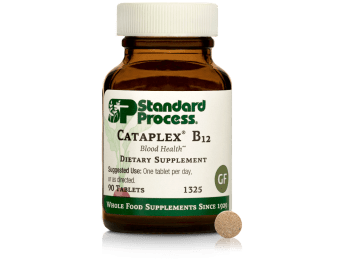
| Cataplex® B12View product →Standard Process | Supports blood health and general well-being* | Each tablet supplies vitamin B12 6 mcg and a 355 mg blend of bovine liver, organic carrot, organic sweet potato, calcium lactate, porcine stomach parenchyma, bovine spleen, ovine spleen, bovine adrenal extract and oat flour. | One tablet per day, or as directed.Full ingredients and cautions → |
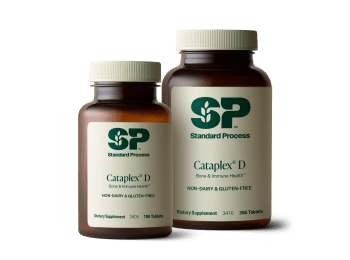
| Cataplex® DView product →Standard Process | Supports bone health, mineral absorption and immune system* | Per two tablets: vitamin A 300 mcg RAE, vitamin D 40 mcg and calcium 60 mg. Current ingredients: calcium lactate, potassium citrate, glycerine, acacia fiber, modified corn starch, sucrose, calcium stearate, vitamin A palmitate, ascorbic acid and cholecalciferol. | Two tablets daily, or as directed.Full ingredients and cautions → |
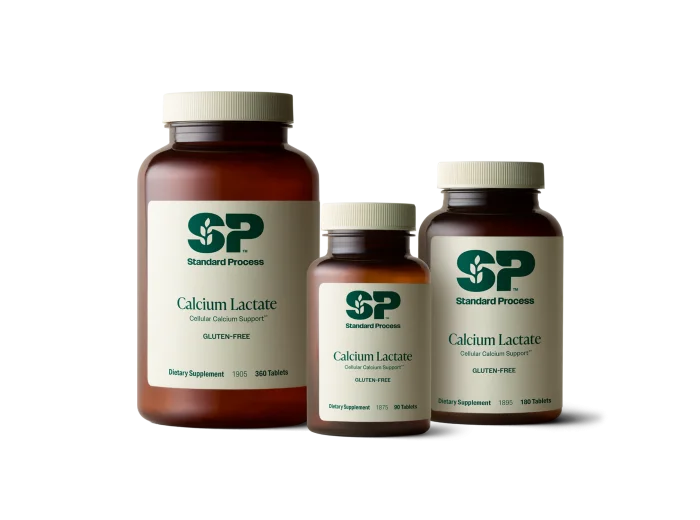
| Calcium LactateView product →Standard Process | A vegan, non-dairy calcium-and-magnesium formula supporting healthy bone structure, muscle contraction, nerve transmission and cellular function.* | Three tablets provide calcium from calcium lactate and calcium stearate plus magnesium from magnesium citrate. | Three tablets per day, or as directed by your healthcare practitioner.Full ingredients and cautions → |
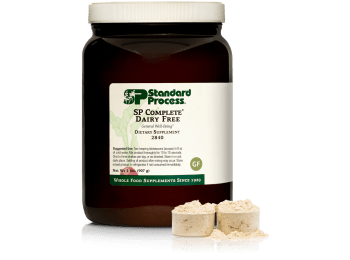
| SP Complete® Dairy FreeView product →Standard Process | Dairy Free Rice Protein | Each Serving Size (2 Heaping Tablespoons) contains: Calories 110, Total Fat 2 g, Total Carbohydrate 10 g, Dietary Fiber 4 g, Total Sugars <1 g, Protein 13 g, Choline 70 mg, Calcium 200 mg, Iron 0.5 mg, Sodium 25 mg, Potassium 80 mg. Proprietary Blend 27.8 g: Rice protein, flax meal, calcium citrate, magnesium citrate, organic buckwheat (aerial parts), organic Brussels sprouts (aerial parts), organic kale (aerial parts), inositol, organic alfalfa (aerial parts)… | Two heaping tablespoons (scoops) in 8 oz of cold water. Mix product thoroughly for 10 to 15 seconds. One to three shakes per day, or as directed. Store in a cool, dark place. Settling of product after mixing may occur. Store…Full ingredients and cautions → |
Questions about adults over 60
Should everyone after 60 take the same supplement routine?
No. Diet, existing products, medicines and individual needs differ. Use age to organize questions, then compare the complete labels in the context of your own routine.
Is a nutrition shake always a complete meal replacement?
No. Compare its full Nutrition or Supplement Facts panel and its intended use. A protein-focused powder may not provide the full nutrition needed to replace a meal.
Can I crush a supplement if tablets are difficult to swallow?
Ask a pharmacist about the exact product and an appropriate alternative. Do not assume that every tablet or capsule can be altered.
Evidence and product information sources
- NIH ODS: Vitamin B12 ↗
- NIH ODS: Vitamin D ↗
- FDA: Mixing medications and supplements ↗
- FDA: Information for supplement consumers ↗
- Authorized WSNC Standard Process store information ↗
Public health references explain nutrition and evidence limits; they do not endorse WSNC or these products. The product table uses existing catalog records. No new clinician review, label refresh or price update is claimed.